Culture & Heritage

The Beauty of Ghanaian Culture: Traditions That Shape Everyday Life

Explore the richness of Ghanaian culture, from traditions and festivals to everyday life, and discover how these stories inspire Discover Ghana puzzles.

The Beauty of Ghanaian Culture: Traditions, Identity, and Everyday Life

Ghanaian culture is not something that exists only in history books or during special celebrations.

It is lived.

It is experienced in everyday moments — in the way families gather, in the stories elders tell, in the rhythms of music that move through communities, and in the quiet traditions that shape identity over time.

To understand Ghana is not simply to visit it.
It is to experience the depth of its culture — a culture that is both rooted in history and alive in the present.


Culture Is Not Taught — It Is Lived

In many parts of the world, culture is something you learn about.

In Ghana, culture is something you grow up within.

From an early age, children are surrounded by:

  • Language rich with meaning and proverbs
  • Traditions that guide behavior and relationships
  • A strong sense of community and belonging

Respect for elders is not explained — it is practiced.
Storytelling is not scheduled,  it happens naturally.
Identity is not taught it is absorbed.

This is what makes Ghanaian culture so powerful.

The Role of Community in Ghanaian Life

One of the most defining aspects of Ghanaian culture is its strong sense of community.

Life is rarely lived in isolation.

In towns, cities, and villages alike, there is a shared understanding:

“We are connected.”

This is reflected in:

  • Communal celebrations
  • Collective problem-solving
  • Extended family structures

It is not uncommon for children to be raised not just by parents, but by entire communities.

This sense of belonging creates a deep-rooted identity — one that extends beyond the individual.


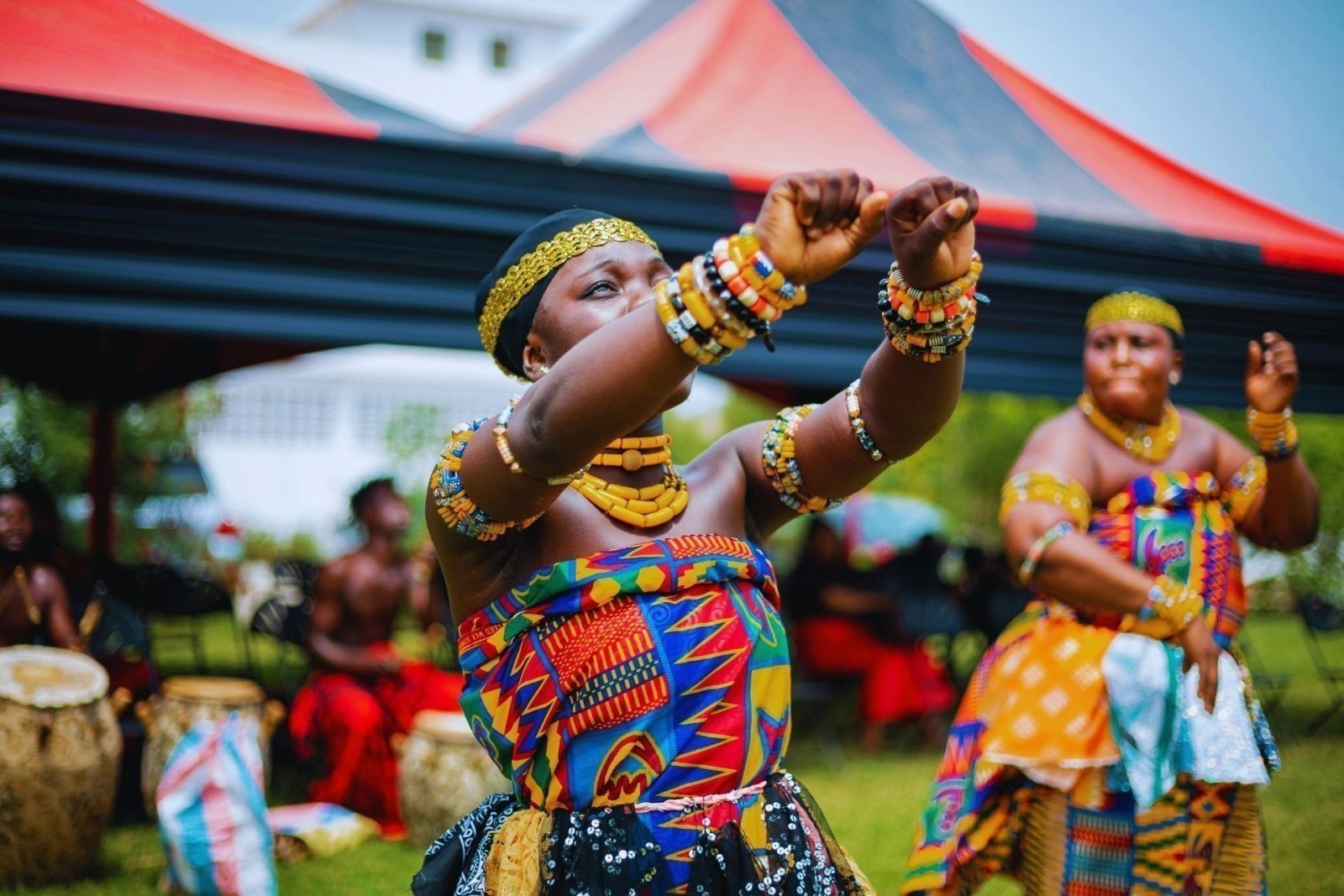
Festivals — Celebrating History, Identity, and Resilience

Ghana’s festivals are more than colorful events.

They are living expressions of history.

Each festival tells a story:

  • Of migration
  • Of survival
  • Of victory
  • Of remembrance

Festivals such as:

  • Homowo (celebrating resilience and overcoming famine)
  • Akwasidae (honoring Ashanti royalty and heritage)
  • Hogbetsotso (marking the migration of the Anlo people)

…are not just traditions — they are cultural narratives passed down through generations.

They remind communities of where they come from and what they have endured.

Symbolism in Everyday Life

In Ghana, meaning is often expressed visually.

From kente cloth to Adinkra symbols, design is never just decorative — it is intentional.

Each pattern, color, and symbol carries meaning:

  • Status
  • Values
  • Beliefs
  • History

For example:

  • Sankofa teaches the importance of learning from the past
  • Gye Nyame reflects the supremacy of God
  • Adinkrahene represents leadership

These symbols are not just worn — they are understood.


The Everyday Beauty That Often Goes Unnoticed

Some of the most powerful expressions of culture are not found in ceremonies — but in everyday life.

  • A mother preparing a traditional meal
  • Children playing in a compound
  • Traders calling out in bustling markets
  • The sound of highlife music drifting through the air

These moments may seem ordinary.

But they are deeply cultural.

They are the threads that hold identity together.

When Culture Becomes Distant

For many Ghanaians living abroad, these everyday experiences are no longer constant.

Culture becomes:

  • Something remembered
  • Something visited occasionally
  • Something that risks fading over time

This is especially true for younger generations growing up outside Ghana.

Without regular exposure, the connection weakens.

And when that connection weakens, identity can begin to feel uncertain.


Reconnecting Through Storytelling

This is where storytelling becomes essential.

Stories have the power to:

  • Preserve culture
  • Teach identity
  • Rebuild connection

And storytelling doesn’t have to be formal.

It can exist through:

  • Conversations
  • Visuals
  • Shared experiences


From Culture to Puzzle — A New Way to Experience Ghana

At Discover Ghana, we asked a simple question:

“How can we make culture something people can experience again?”

The answer was not just through books or videos — but through interaction.

Through something tactile.

Through something shared.

That is how the idea of culturally inspired puzzles was born.

Each puzzle is designed to:

  • Capture real moments of Ghanaian life
  • Reflect authentic cultural details
  • Spark curiosity and conversation


Explore Our Cultural Inspirations → (Cultural Inspiration page)


Why This Matters

This is not just about puzzles.

It is about:

  • Preserving culture
  • Reconnecting generations
  • Creating meaningful experiences

It is about ensuring that Ghana’s stories are not lost — but lived, shared, and passed on.


Final Thought

Culture is not something we inherit once.

It is something we carry, nurture, and pass forward.

And sometimes, all it takes is one experience — one story, one moment — to bring it back to life.

Leave a Reply

Your email address will not be published. Required fields are marked *